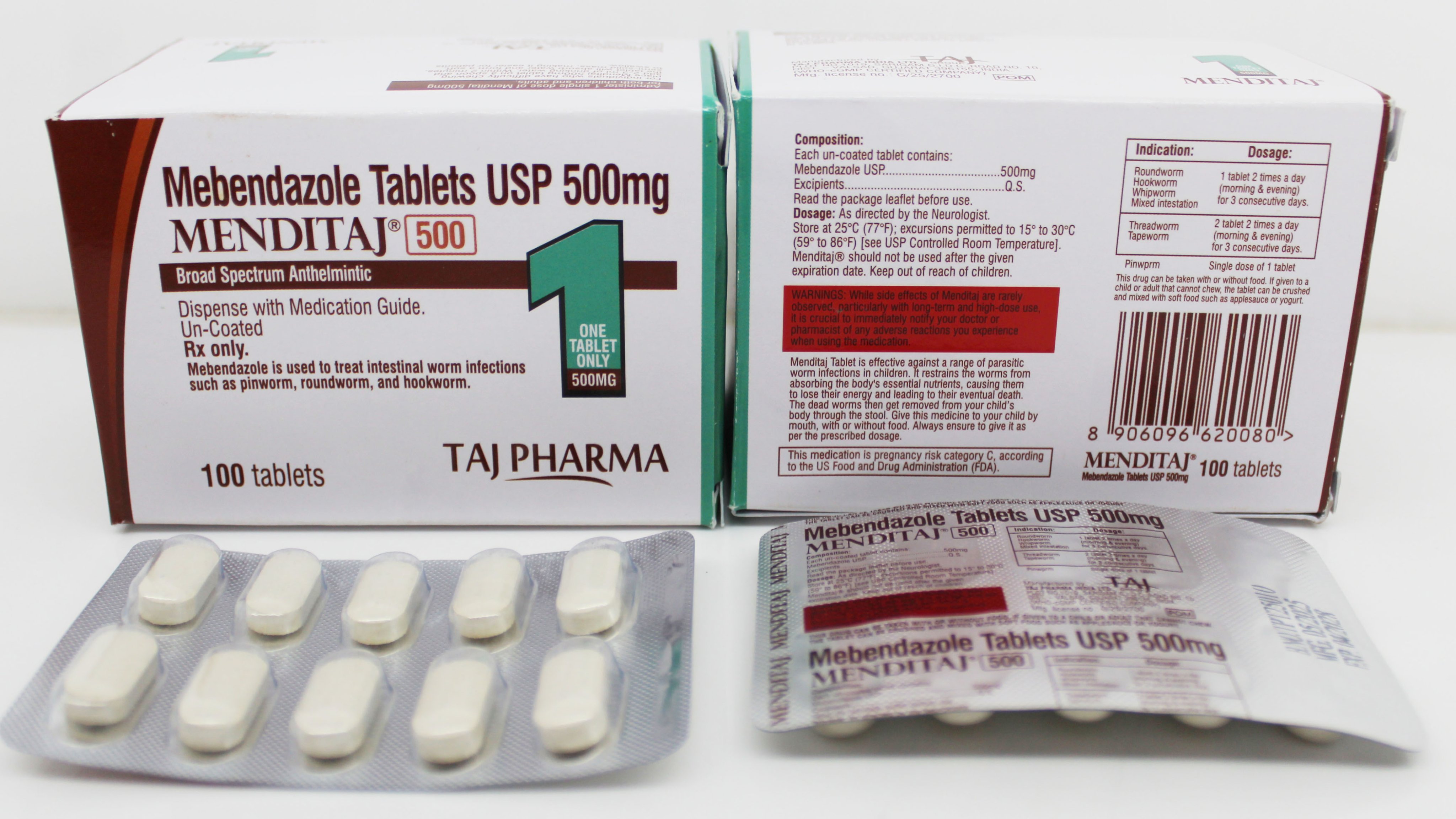
Comprehensive scientific explanation of how Mebendazole eliminates intestinal parasites through selective microtubule inhibition, glycogen depletion, and energy starvation at the molecular level.
Mebendazole is a broad-spectrum benzimidazole anthelmintic that works by selectively inhibiting parasite microtubule polymerization, leading to energy depletion and death of the parasite while sparing mammalian cells.
Understanding how Mebendazole eliminates intestinal worms in easy-to-follow steps
Mebendazole specifically targets the worm's internal structure while leaving human cells untouched.
Think of Mebendazole as a smart missile that only attacks worms, not your body's cells. It's like having a key that only fits the worm's "door."
Once attached, Mebendazole stops the worm from performing essential life functions like moving and reproducing.
Imagine the worm's internal machinery suddenly stops working. It can't move, eat, or multiply - essentially freezing the worm in place.
The worm can't absorb glucose (sugar), which is its main food source. This causes the worm to run out of energy.
Like cutting off the food supply, the worm starves because it can't get the energy it needs to survive. It's like the worm's "kitchen" is closed.
Without energy, the worm becomes paralyzed and dies. Your body then naturally removes the dead worms through normal digestion.
The dead worms are harmlessly passed out of your body during normal bowel movements. It's a natural cleanup process.
Mebendazole works like this: It finds the worms, stops them from working, starves them of energy, and they die naturally. Your body then safely removes them. The best part? It only affects worms, not your body!
| Chemical Name: | Methyl 5-benzoyl-2-benzimidazolecarbamate |
| Molecular Formula: | C16H13N3O3 |
| Molecular Weight: | 295.3 g/mol |
| Structure: | Benzimidazole core with carbamate group |
| Solubility: | Poorly water soluble, lipophilic |
| pKa: | 5.2 (basic) |
| Absorption: | Poor (2-10% oral bioavailability) |
| Distribution: | Minimal systemic distribution |
| Protein Binding: | 90-95% (mainly albumin) |
| Metabolism: | Minimal first-pass metabolism |
| Elimination: | Fecal excretion (unchanged) |
| Half-life: | 2.8-9 hours |
Oral administration with minimal systemic absorption. Drug reaches intestinal lumen where parasites are located.
Mebendazole binds to parasite β-tubulin and begins disrupting microtubule formation.
Parasite glucose transport mechanisms fail, leading to energy crisis onset.
Parasite glycogen reserves are exhausted, ATP levels drop dramatically.
Complete energy failure leads to paralysis and death of the parasite.
Dead parasites are expelled through normal intestinal peristalsis.
Point mutations in the β-tubulin gene reduce drug binding affinity, particularly at positions 167, 198, and 200.
Upregulation of P-glycoprotein and other efflux pumps reduces intracellular drug concentration.
Enhanced expression of detoxifying enzymes that can metabolize or inactivate the drug.
Expression of alternative β-tubulin isoforms with lower drug affinity.
The mechanism is particularly effective against nematodes due to their high dependence on glucose metabolism and rapid tubulin turnover.
These organisms have different tubulin structures or alternative energy metabolism pathways that make them less susceptible to mebendazole's mechanism.
Development of improved formulations with better bioavailability and targeted delivery systems.
Molecular surveillance programs to track resistance gene mutations and emergence patterns.
Research on synergistic combinations with other anthelmintics to overcome resistance.
Investigation of potential anti-cancer and anti-viral properties based on microtubule inhibition.
Taj Pharma welcomes research collaborations and scientific inquiries. Our R&D team provides comprehensive support for pharmacological studies and clinical research on Mebendazole mechanisms.
Compare Mebendazole's mechanism with other anthelmintics including Albendazole.
Compare DrugsLearn about the biology and life cycles of intestinal worms targeted by Mebendazole.
Parasite GuideWHO-GMP certified manufacturing processes and quality control procedures.
ManufacturingOur team is ready to provide you with the best pharmaceutical products and support